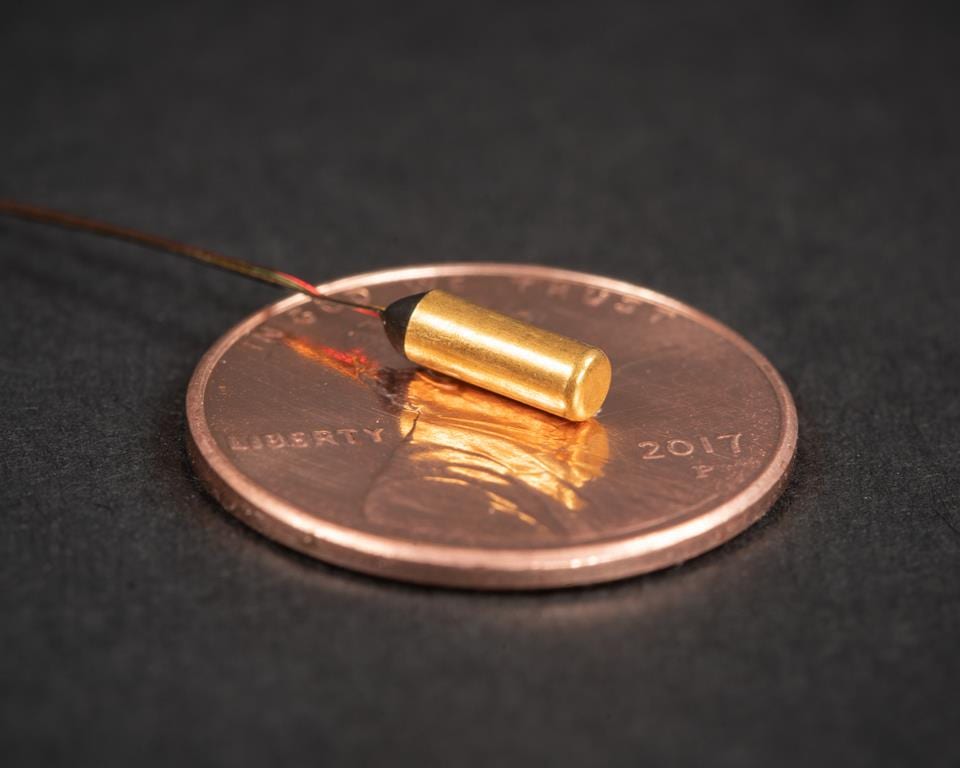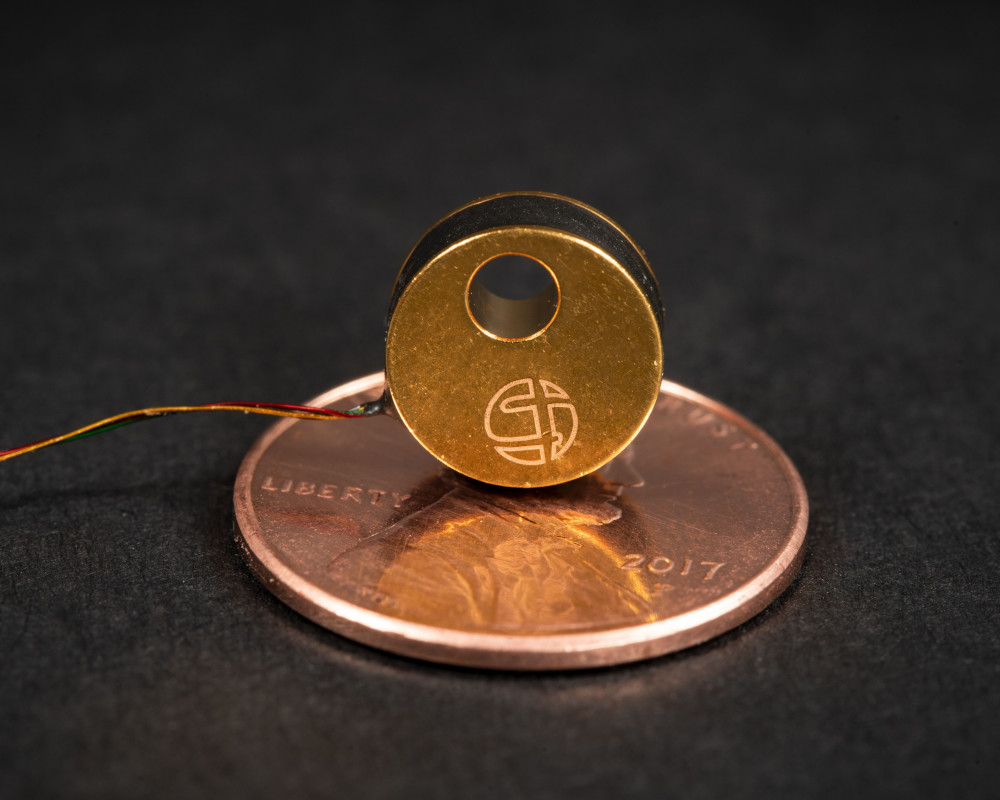
Model RO-105(100K) – Ruthenium Oxide RTD
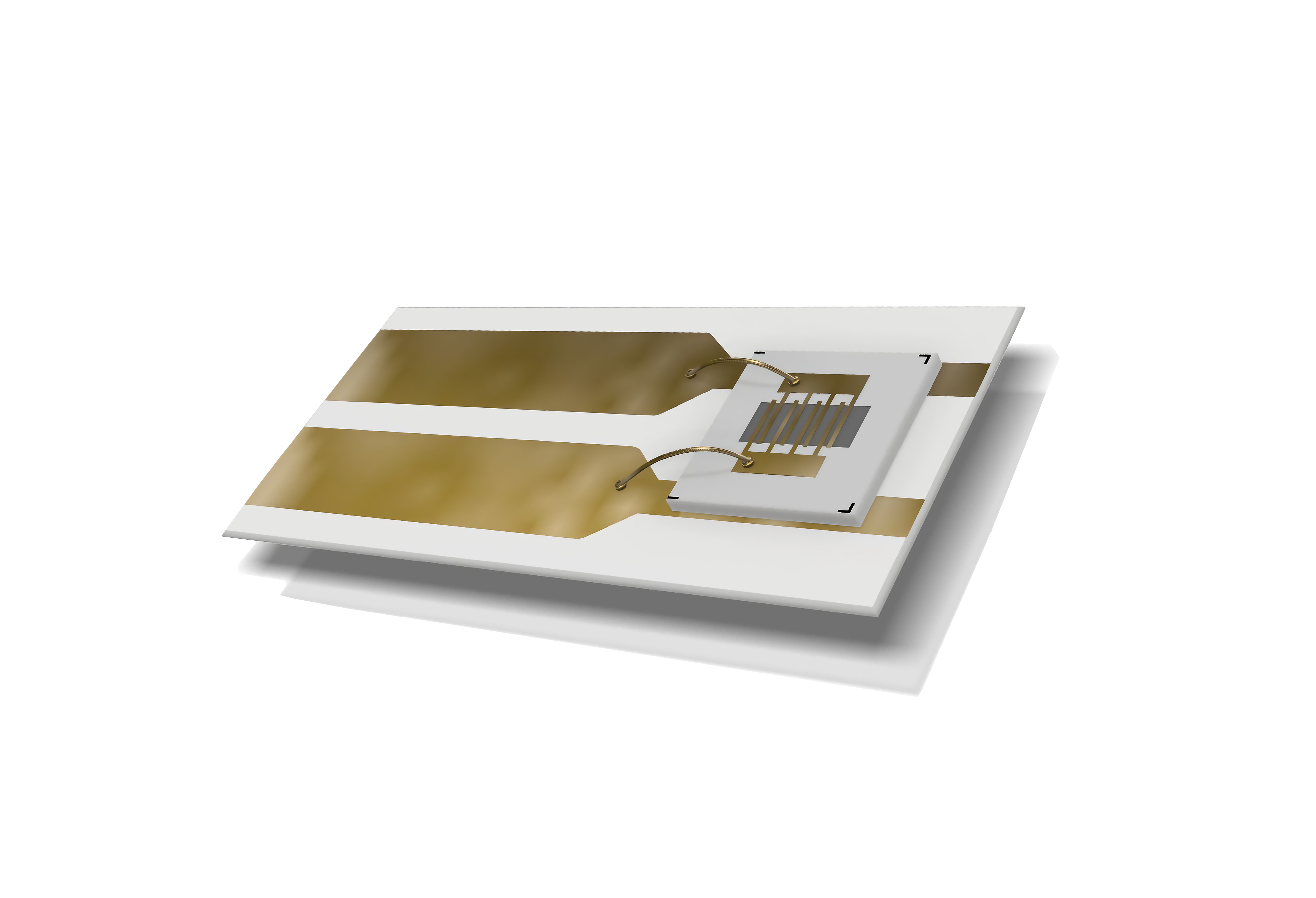
The Series RO-105 Ruthenium Oxide Sensors are thick-film resistors which adhere to a single resistanceversus-temperature curve. They offer excellent performance characteristics in magnetic field environments. These sensors do not exhibit magnetoresistance in fields up to 2 T over their range. A small positive (but negligible) magnetoresistance may be present at larger fields. No orientation dependence of sensor mounting to field direction has been observed. Ruthenium oxide sensors are available as uncalibrated, grouping, or calibrated units and feature good reproducibility, fast response time and miniature size, all at a reasonable cost.Additional information will be available in the near future.
Please contact us for immediate follow through.
Physical Size
The following sizes are standard. Many additional custom mounting configurations and probe assemblies are available.
- Model RO-105 Ruthenium Oxide Temperature Sensors
- Physical ConfigurationDiameterLength
- Standard "Can"0.093 inches0.200 inches
- Model 22 Bobbin0.360 inches0.120 inches
- Model 25 Bobbin0.562 inches0.200 inches
- (Unencapsulated size = 0.508 mm H x 1.269 mm W x 1.396 mm L)
Useful Temperature Range
Our RO-105 temperature sensors operate from 2.0 K to 273 K.
Nominal Sensitivity
- Nominal Sensitivity (dR/dT)Nominal Resistivity (dR/dT)
- 17,390 ohms / K @ 2.0K239 kohms @ 2.0K
- 11,060 ohms / K @ 4.2K205 kohms @ 4.2K
- 1,400 ohms / K @ 20K139 kohms @ 20K
- 162 ohms / K @ 77K112 kohms @ 77K
- 91 ohms / K @ 100K109 kohms @ 100K
- 18 ohms / K @ 273K101 kohms @ ambient
Lead Material
Phosphor Bronze
Either two leaded or four leaded bonded cable, polyimide-coated 32 AWG or 36 AWG . Conductors are color coded. Phosphor Bronze exhibits good electrical conductivity, but poor thermal conductivity. Resistivity is 2.7 Ohms per foot.
Stranded Copper
Teflon-coated wire either two leaded 30 AWG or two and four leaded 36 AWG. Conductors are color coded. Copper exhibits good electrical and thermal conductivity. Resistivity is 0.6 milli-Ohms per foot.
Manganin
Either two lead or four lead polyurethane-coated 36 AWG. Conductors are not color coded. Exhibits good electrical conductivity, but poor thermal conductivity. Resistivity is 11.8 Ohms per foot. Manganin is not easy to work with.
Lead Configurations
Our RO-105 temperature sensors are available in both two and four lead configurations.
Two Lead Configuration
This configuration does not compensate for lead resistance. Therefore, slight errors in sensor resistance/voltage can be induced. The magnitude of the error is proportional to the length of the leads.
Four Lead Configuration
This configuration provides the highest accuracy by compensating for lead wire resistance.
Sensor Accuracy / Interchanqeability
As you review our various sensor types, you will notice that we offer the advantage of
"Grouping" /"interchangeability." We presently offer three levels of interchangeability/accuracy.
Fundamentally, cryogenic temperature sensors are supplied in three categories:
• Uncalibrated
• Grouped
• Calibrated
Uncalibrated
As the name implies, an uncalibrated sensor is provided to our customers as representative of a particular sensor type, but with no specific calibration information.
Model RO-105 Uncalibrated
+/-O.3 @ 4.2K
Grouped
Certain sensor types exhibit interchange resistance or voltage output characteristics to a standard curve. Grouping sensors offered by Scientific Instruments include:
1. Si-410 Silicon Diode
2. RO-l05 Ruthenium Oxide
3. RO-600 Ruthenium Oxide
The ability to offer interchangeable sensors comes from a thorough analysis and understanding of the basic material to be used as the sensing element. The primary advantage to "grouping" sensors is that they all adhere to a standard V/T or R/T curve, thus eliminating the need and expense of an individual calibration. Each Si-410 sensor is tested in liquid helium, liquid nitrogen and ice. Each sensor must repeat in liquid helium ± 0.01 K over a ten cycle test. The sensors are then grouped according to the following table:
- Group A Standard DeviationGroup AA Standard Deviation
- +/- 0.10K @ 4.2K+/- 0.10K @ 4.2K
- +/- 0.75K @ 77K+/- 0.50K @ 77K
- +/- 20.0K @ 273K+/- l5.0K @ 273K
Calibrated
All sensors offered by Scientific Instruments may be offered as individually calibrated units, with the exception of our thermocouples. The sensors are placed into a calibration cryostat, and data is recorded for each sensor using an NIST traceable standard against the ITS-gO standard.
- Calibration Ranges
- D1 = 2.0K to 20K
- G1 = 2.0K to 100K
- GG1 = 2.0K to 273K
- H = 4.2K to 20K
- L = 4.2K to 100K
- LL1 = 4.2K to 273K
- * Data is subject to changes as a result of product improvement.
- Calibration Accuracy
- 2K to 4.2K = +/- 0.05K
- 4.2K to 20K = +/- 0.05K to 0.1K
- 20K to 80K = +/- 0.1K to 0.2K
- 80K to 100K = +/- 0.2K to 0.4K
- 100K to 273K = +/- 0.4K to 1K
- * Data is subject to changes as a result of product improvement.
Notes
Standard Configuration
Model RO-10S sensors are normally mounted in a gold-plated copper case with four 36 AWG polyimid coated, color-coded, phosphor bronze leads. Case size is 0.093" diameter by 0.200" long. Special leads of phosphor-bronze or manganin wire at various lengths can be furnished at a minimum additional cost. Other packages can be supplied, contact us for details.
For best results be sure to thermally achor both the sensor and leads to the material, or sample, whose temperature is to be measured.
Custom Calibration
Consult factory.